
Last Updated on April 22, 2026 by Ina Geißler
Flying alone with children – an honest guide
Traveling alone with children can feel overwhelming at first – especially if it’s your first time flying solo as a parent. Questions come up quickly: Will my child sleep? How do I manage security checks on my own? What documents do I need? And what if something goes wrong mid-flight?
I’ve traveled alone with children many times. First with a baby, then with toddlers, now with four kids at once. Often without a second adult, and occasionally on long-haul flights. This guide is written from real experience and is meant to help parents feel prepared, not anxious.
-> There is no single “right” way to fly alone with children – but there are ways to make it much easier.
-> Find all our tips for flying with children here
Why flying alone with children is different
- 1. Why flying alone with children is different
- 2. Airport logistics when you are on your own
- 3. Boarding and seating strategies
- 4. Managing children during the flight
- 5. Choosing seats when flying alone with children
- 6. Flying with kids: tips that actually work
- 7. Documents you should always carry
- 8. Emotional side: confidence matters
- 9. FAQ: Flying alone with children
- 10. Final thoughts on flying alone with children
When you fly with another adult, responsibilities are shared automatically. One person holds documents, the other watches the kids. One goes to the restroom, the other stays seated. When you travel alone, everything is on you.
That doesn’t mean flying alone with children harder in every situation – but it is different. Planning ahead becomes more important, and flexibility becomes your biggest asset.

You often don’t have a real choice of flight time
Many parents ask whether day flights or night flights are better when flying alone with kids. The honest answer: often you don’t really get to choose.
- Flights to the USA usually depart Europe in the morning or early afternoon and land in the evening.
- Flights from the USA to Europe often depart in the afternoon and arrive the next day.
- Long-haul routes are scheduled around time zones, not family preferences.
This is important to understand, because it takes pressure off. If your only option is a daytime long-haul flight with a toddler – that’s not a bad decision. It’s simply reality.
Wouldn’t you love to finde flights that suit your personal expectations? Find out how ChatGPT can help you find better flights!
Day flight vs night flight when traveling solo
Day flights can feel exhausting because children are awake for most of the journey. On the other hand, they are often easier when traveling alone with kids.
Pros:
- You don’t have to force sleep in an unfamiliar environment.
- Kids are more alert and cooperative during boarding.
- Easier bathroom breaks and movement during the flight.
- Less stress if a child refuses to sleep.
Cons:
- You need more entertainment and snacks.
- Long hours of keeping children engaged.
- Less rest for you as the parent.
Day flights are often underestimated – but for solo parents, they can be surprisingly manageable when flying alone with children.
Night flights – not always the magic solution
Night flights sound ideal in theory: kids sleep, you rest, everyone arrives refreshed. In reality, this doesn’t always work out.
Pros:
- If your child sleeps well on planes, the flight feels shorter.
- Fewer meals and activities to manage.
- Calmer cabin atmosphere.
Cons:
- Some children do not sleep at all.
- You are managing tired, overstimulated kids alone.
- Getting up for the restroom with a sleeping child can be tricky.
- You arrive exhausted if sleep doesn’t happen.
For solo parents, night flights can be either wonderful or extremely challenging – there is rarely a middle ground.
Airport logistics when you are on your own
Security checks
Security is often the most stressful part when flying alone with children.
Tips that help:
- Wear a backpack instead of a shoulder bag.
- Use a baby carrier for infants – it keeps your hands free.
- Prepare liquids and electronics before reaching the conveyor belt.
- Tell security staff you are traveling alone with kids – they are often helpful.
A baby carrier is one of the most practical tools when flying solo. It allows you to manage documents, shoes, strollers, and children without constantly juggling.
Follow along on Instagram: Europetravelwithkids
Restrooms at the airport
This is a topic parents rarely talk about – but it matters…
If you travel alone:
- Small children usually have to come with you into the restroom.
- A baby carrier makes restroom breaks significantly easier.
- Family restrooms are a lifesaver when available.
Planning restroom breaks before boarding helps avoid stress once on the plane. Remember how tiny the stalls are…?
Boarding and seating strategies
When traveling alone, boarding early is usually Nan option but it’s not always necessary or helpful.
Consider:
- Early boarding gives you time to organize seats, bags, and entertainment.
- Late boarding can work if your child struggles with sitting still for long periods.
-> Choose what fits your child best, not what others recommend universally.
When possible, aisle seats are practical for solo parents. They allow easier access to the restroom and more flexibility if a child needs to stand or move.
Managing children during the flight
Entertainment without pressure
You do not need constant entertainment – but you do need variety.
Helpful ideas:
- Download shows and audiobooks in advance.
- Bring a few small, new items instead of many familiar toys.
- Snacks work as both food and distraction.
- Don’t aim for perfection – boredom is not dangerous.
Children don’t need to be entertained every minute. Sometimes simply looking out the window or watching cabin activity is enough.
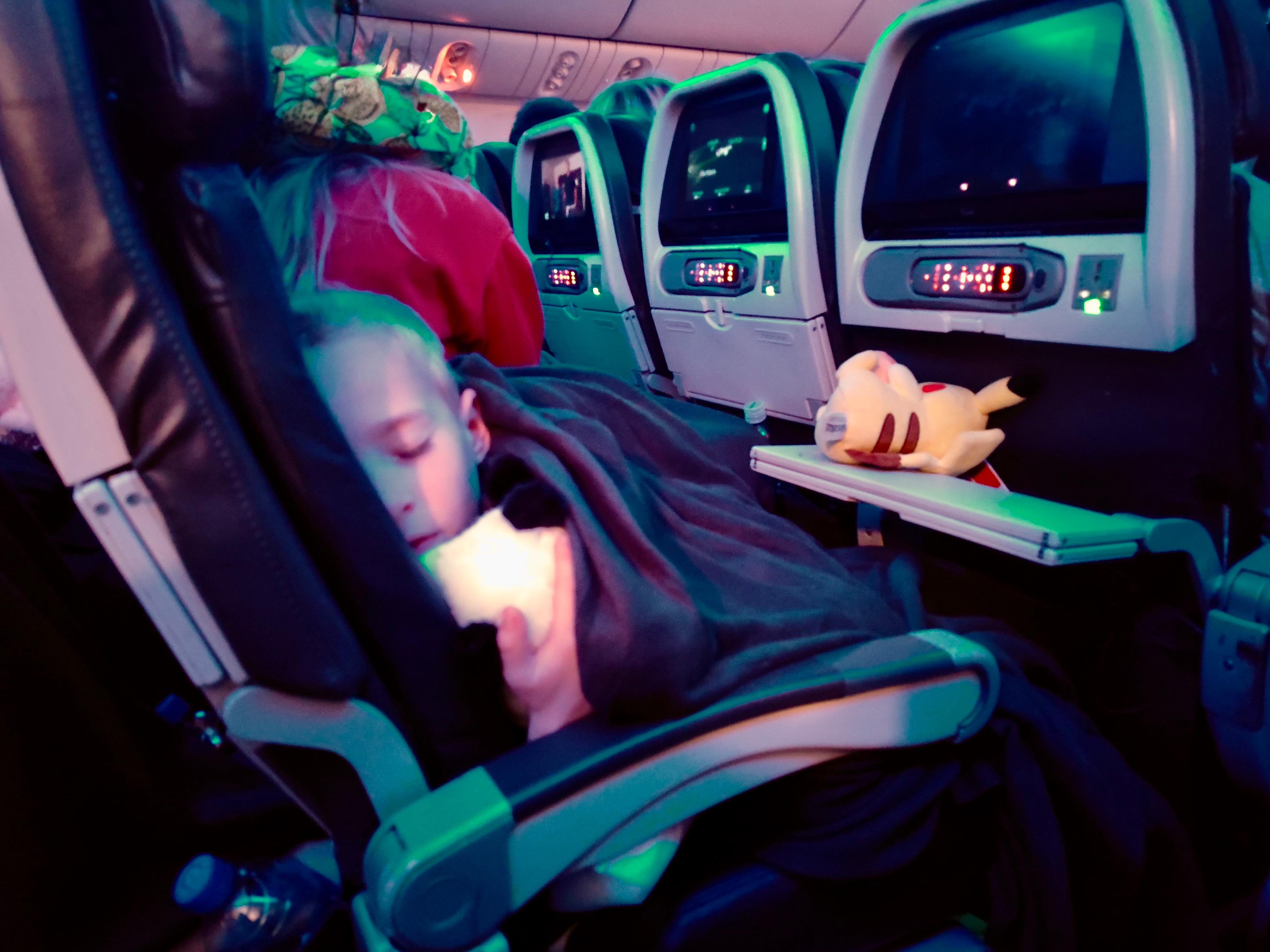
Sleep expectations
Let go of strict sleep expectations. Some children sleep on planes, others don’t – and that is not a parenting failure.
What helps:
- Familiar blankets or sleep cues.
- Accepting short naps instead of full sleep cycles.
- Adjusting expectations for the first day after arrival.
Wanting to read more? Here you’ll find all our travel tips for families!
Choosing seats when flying alone with children
When you are flying alone with children, choosing the right seat can make a bit more difference than usual.
Having easy access to the aisle, being able to reach your child quickly and keeping everything within reach can make the whole flight feel more manageable. At the same time, you don’t need perfect seats for it to work.
If you want to know when seat selection is actually worth it and what to look out for, you can read more here:
👉 Best seats on a plane with kids
Flying with kids: tips that actually work
Even when you are traveling alone with your child, many of the general principles of flying with kids still apply.
Things like realistic expectations, keeping routines simple and adjusting your approach depending on your child’s age make a huge difference. What works with a baby will not work with a toddler, and what feels easy with older kids can still be challenging in different ways.
When you are on your own, these basic tips become even more important. There is no second adult to take over, so small things like timing, packing and flexibility have a bigger impact on how smooth the journey feels.
If you want a deeper understanding of what actually helps at each age and what parents often underestimate, it’s worth taking a closer look at the bigger picture.
👉 You can find detailed tips here: Flying with kids – what actually helps
Documents you should always carry
When flying alone with children, you should always bring the following:
- Your child’s passport
- Your own passport
- Proof of parentage if surnames differ
- A travel consent letter if leaving your country
Even if documents aren’t always checked, having them avoids unnecessary stress. Requirements vary by country and airline.
Emotional side: confidence matters
Children pick up on stress quickly. The calmer and more confident you appear, the easier the journey becomes for everyone. Flying alone with children is not a sign of chaos. It’s often a sign of adaptability, experience, and trust in yourself.
The first solo flight may feel intimidating. The second already feels easier. By the third, it often becomes routine.
FAQ: Flying alone with children
Is flying alone with kids safe?
Yes. Airlines and airports handle solo parents every day. Preparation matters more than experience.
Is flying alone with children harder with babies or toddlers?
Both have challenges. Babies require physical care, toddlers require emotional management. Neither is “easier” in general.
Should I avoid long-haul flights alone with kids?
Not necessarily. Many parents find long-haul flights easier than short ones because routines settle in after takeoff.
Do airlines offer help for solo parents?
Cabin crew often assist when possible, but you should plan to manage independently.
Final thoughts on flying alone with children
Flying alone with children is not about doing everything perfectly. It’s about preparation, flexibility, and trusting yourself. Most solo flights don’t become memorable because everything went wrong – but because parents realize they are far more capable than they thought.

Kommentar verfassen